
Key Takeaways
- Orthodontic treatment is a real option for adults at any age.
- Braces and Invisalign work differently and suit different lifestyles and oral health needs.
- Your age, dental history, and daily routine all play a role in which option fits you.
- A thorough exam with an Ottawa dentist helps map out the right path forward.
You brush, you floss, you do everything right, and yet you still catch yourself wishing your teeth sat a little differently. Maybe they’ve shifted over the years. Maybe you’ve just decided now is the time. Either way, you’re not alone. Many adults are looking into orthodontic treatment in their 30s, 40s, and beyond. Fairlawn Dental Centre works with adults at every stage of life to find the right fit, starting with a proper look at your full oral health picture. If you’ve been weighing your options, the orthodontic services available cover a range of treatments designed around your specific needs.
Both braces and Invisalign can help adults achieve straighter teeth, but the right choice depends on your oral health, lifestyle, and where you are in life. Here’s what you need to know before making a decision.
Why Adults Are Choosing Orthodontic Treatment Now
Teeth don’t stay put. Over time, they shift. Bites change. Spaces that weren’t there before start to appear. Some adults never had orthodontic treatment as kids. Others did, but skipped wearing their retainer long enough for things to move back.
Whatever brought you here, treatment options have come a long way. braces and Invisalign are both more accessible and more comfortable than they were even a decade ago. Adults at every stage of life are finding that it’s a practical, worthwhile investment in their oral health.
How Braces & Invisalign Actually Work
Traditional Braces
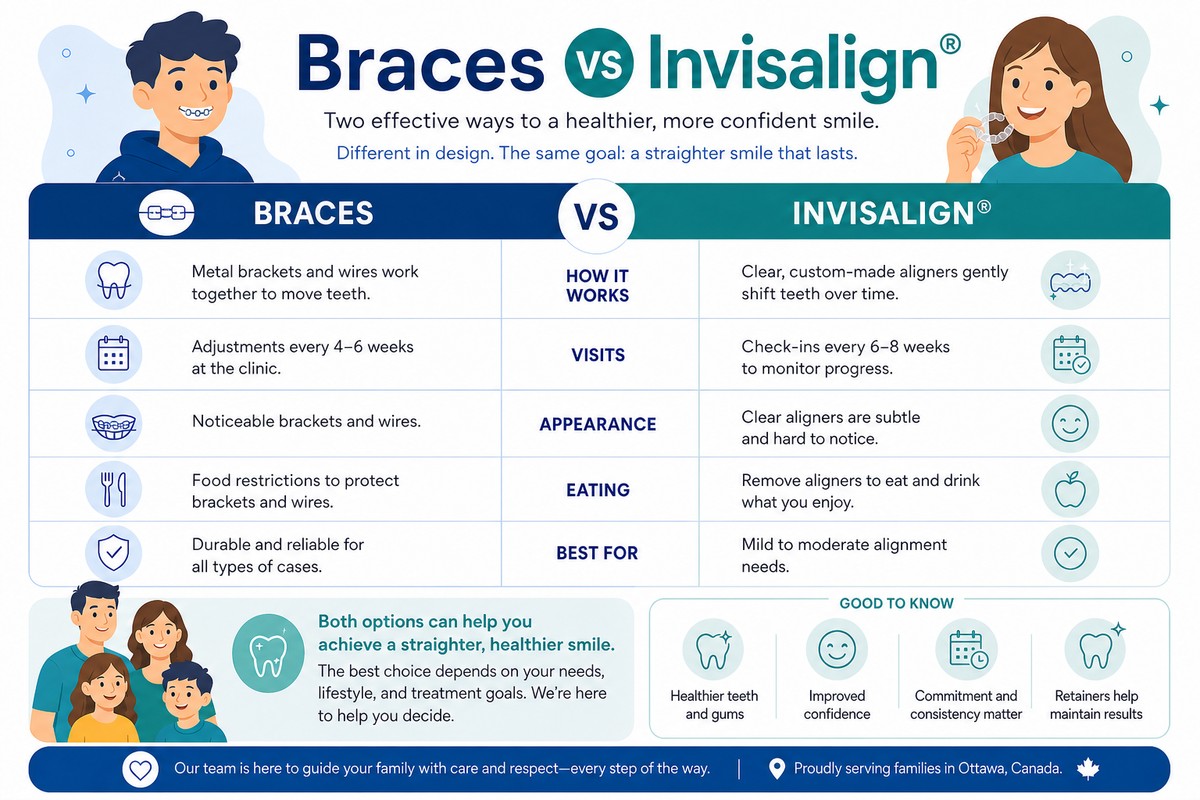
Braces use metal brackets bonded directly to your teeth, connected by a wire that the dentist adjusts over time. That steady, controlled pressure gradually moves your teeth into alignment. Because they’re fixed in place, they work around the clock without you having to think about them.
They’re a reliable option for a wide range of alignment issues, including more complex cases where precise control matters.
Invisalign Clear Aligners
Invisalign uses a series of clear, custom-fitted trays that fit over your teeth. You swap them out every one to two weeks as your teeth shift into position. They’re nearly invisible when worn and come out completely for meals, brushing, and flossing.
For adults who want a low-profile option, Invisalign tends to be a popular choice. If you’re also curious how it compares for specific bite concerns, this look at whether Invisalign can fix an overbite covers that in detail.
Key Differences to Consider as an Adult
Lifestyle & Appearance
If you spend a lot of time in meetings, client-facing roles, or social settings, how your treatment looks day-to-day matters. Invisalign trays are barely noticeable. Braces are more visible, though they may be the better fit for more complex tooth movement.
It also comes down to routine. Invisalign requires discipline. You need to wear the trays for around 20 to 22 hours a day for them to work. If that fits your lifestyle, it’s a flexible option. If you know you’d forget to put them back in, braces take that variable out of the picture entirely.
Oral Health Factors
As an adult, your gum health and bone density matter more in the treatment planning process than they do for teenagers. Gum disease, bone loss, or existing dental work like dental implants or veneers can all affect which option is appropriate for you and how long treatment takes.
This is why a proper exam comes first. Your oral health is the foundation for any orthodontic plan.
What Treatment Looks Like at Each Stage of Life
Your 30s
Your 30s can be a practical time to explore orthodontic treatment, but your gum health, bite, and dental history still matter.
Busy schedules are a real factor at this stage. If you’re juggling work, kids, and everything else, you’ll appreciate that Invisalign typically requires fewer in-office check-ins than traditional braces. It’s also worth knowing that the costs and timelines for braces in Ottawa vary depending on your specific case, so getting a proper assessment gives you a realistic picture from the start.
Your 40s & Beyond
Treatment in your 40s and beyond is possible, but there are more factors to weigh. Bone density can change with age, which sometimes means longer treatment timelines. Existing dental work also plays a role. veneers and dental implants, for example, can’t be moved the same way natural teeth can, so your treatment plan needs to account for them.
None of that rules out treatment. It just means the planning needs to be thoughtful and tailored to what’s already in your mouth. For adults who also deal with jaw discomfort alongside alignment concerns, it’s worth knowing how braces may relate to TMJ symptoms before deciding on a path.
How to Take the Next Step Toward a Straighter Smile
Starting with a dental exam and X-rays gives the team a clear picture of your teeth, bone structure, and gum health. From there, the discussion is about your goals, your timeline, and which option fits your life realistically.
There’s no one-size-fits-all answer here. A treatment plan that works for someone in their mid-30s with healthy gums looks different from one designed for someone in their 50s with a few crowns and some bone changes. That’s the point. The plan should fit you.
At Fairlawn Dental Centre, the team takes the time to review your full oral health picture before recommending a path forward. Whether you’re curious about braces, Invisalign, or just want to understand your options, a conversation is a straightforward place to start. Reach out to book a consultation and take things from there.