
Key Takeaways
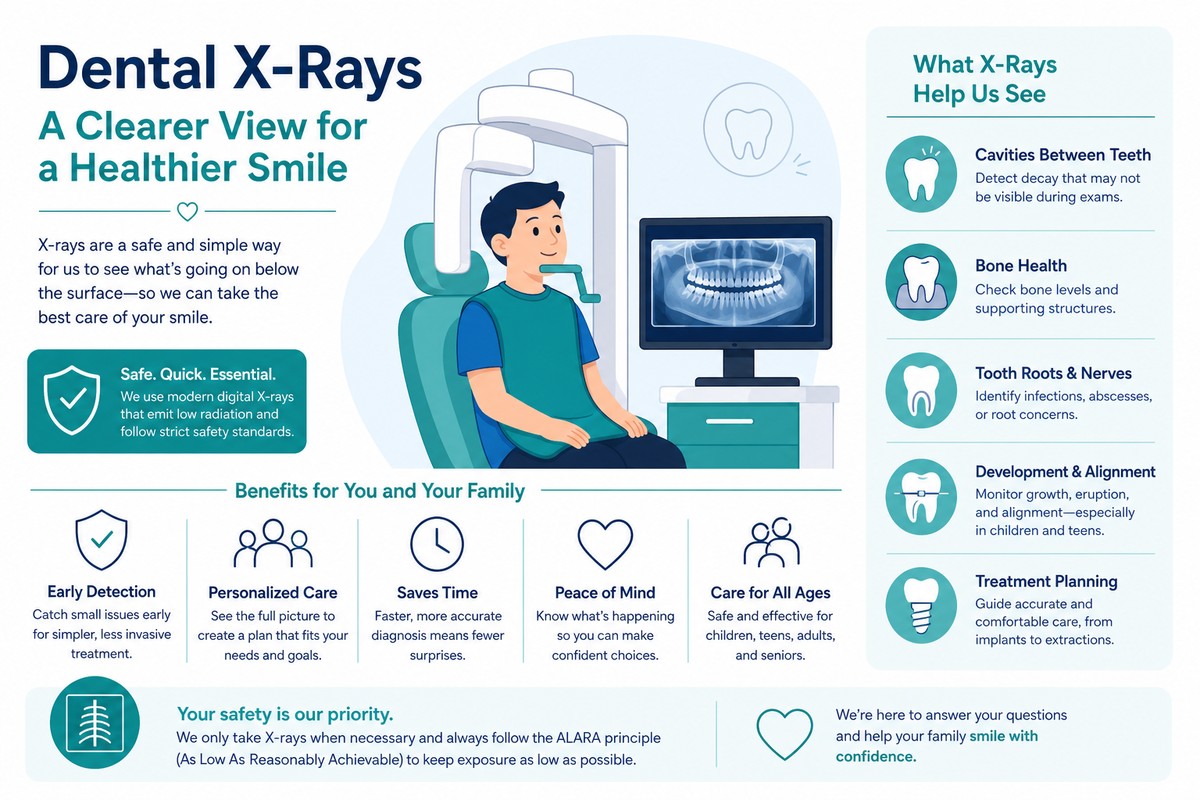
- Dental X-rays reveal decay, bone loss, and infections that aren’t visible during a regular exam.
- Many adults may only need X-rays periodically, but your oral health history can change that schedule.
- Children and teens often need X-rays more frequently due to how quickly their teeth develop.
- Digital dental X-rays use low radiation levels, and your dental team follows Canadian safety guidance to keep exposure low.
- Skipping X-rays can delay detection of problems that affect your treatment options later on.
What Dental X-Rays Actually Show
You can brush twice a day, floss regularly, and still have something developing between your teeth that no one can see with the naked eye. That’s not a failure on your part. It’s simply what happens with decay that starts in tight spaces, or bone changes that occur quietly beneath the gumline.
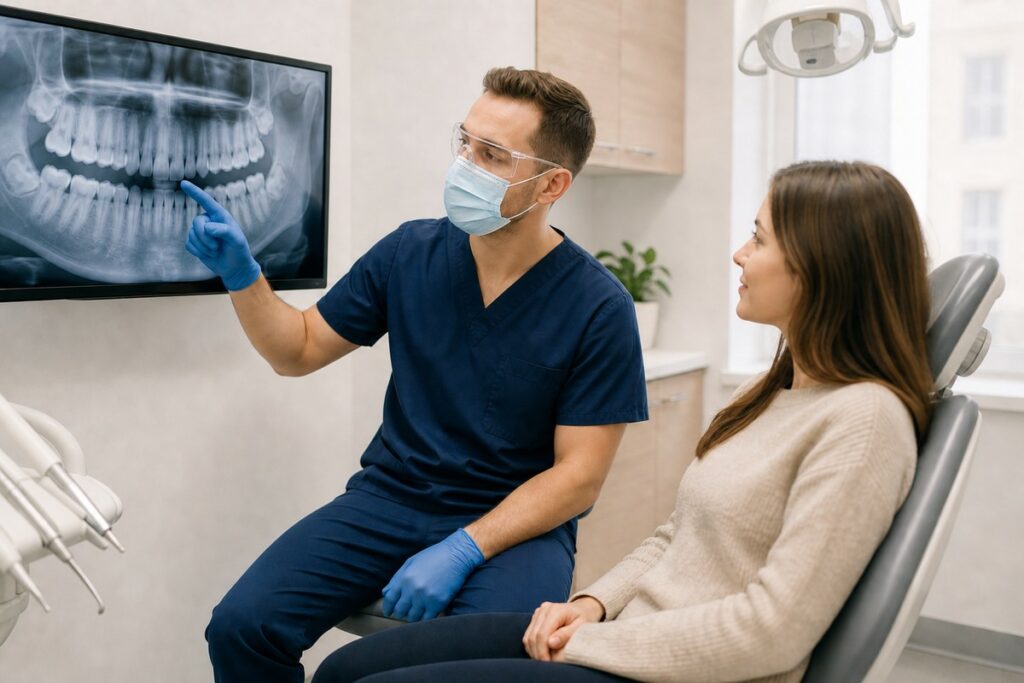
X-rays are an important health tool, and give your dental team a view that a mirror and light just can’t provide. They can reveal cavities forming between teeth, bone loss linked to gum disease, and infections hiding at the root of a tooth. For patients considering dental implants, braces, or other treatments, X-rays also give the dentist the structural picture needed to plan with accuracy.
Without that information, some problems don’t get caught until they’ve grown into something more involved to address.
How Often Do You Really Need X-Rays?
There’s no single answer that fits every mouth. The right schedule depends on your age, your oral health history, and what the dentist finds at each visit.
For Adults
If your teeth and gums are in good shape and you haven’t had much decay in the past, you may only need X-rays periodically. That schedule can shift if you’re dealing with active cavities, gum concerns, or a history of frequent dental work. The dentist looks at your full picture before recommending anything.
You can learn more about what a routine visit involves by reading about dental recall exams and what they include.
For Children & Teens
Kids’ mouths change quickly. Teeth are still coming in, spacing is shifting, and the jawbone is actively developing. More frequent X-rays help the team track that growth and catch crowding or spacing issues early.
For families exploring braces or Invisalign®, those images are often what makes it possible to plan treatment at the right time rather than waiting until problems become harder to manage.
Factors That Affect Your X-Ray Schedule
Your personal oral health history plays a real role in how often X-rays make sense for you. Someone who has had several cavities in the past few years isn’t in the same situation as someone who hasn’t had one in a decade.
Beyond your history, a few other factors can affect your overall oral health risk assessment and may be relevant when the dentist decides whether imaging is useful:
- Dry mouth, which can speed up decay because saliva helps protect your teeth from bacteria and acid
- Smoking, which raises the risk of gum disease and slows healing
- A diet high in sugar or acidic foods and drinks
If you’re a new patient at a dental practice, the team may review previous X-rays or recommend new images if they are needed after your exam. That gives them the information they need to understand your dental history and plan care.
Fairlawn Dental Centre’s team can use that information to build a care plan that reflects where your oral health actually stands.
Are Dental X-Rays Safe for Your Family?
Radiation Levels & Modern Technology
Digital X-rays, which are standard at most dental offices today, use a fraction of the radiation that older film-based equipment required. Your dental team follows Canadian radiation safety guidance to keep exposure as low as reasonably achievable; depending on the image and whether shielding would interfere, a thyroid shield or lead apron may be used.
Special Considerations for Children & Pregnancy
The hygienist adjusts the type and number of X-rays based on a patient’s age and size. For younger children, smaller sensors and fewer images are used as appropriate. You can read more about how often children should get dental X-rays and what factors guide that recommendation.
If you’re pregnant, let the team know before your appointment. They can make informed decisions about timing and take extra precautions when needed.
Skipping X-Rays & What It Could Mean for Your Smile
Decay between teeth or at the root doesn’t announce itself early. You won’t feel it, and you won’t see it. By the time symptoms like sensitivity or pain appear, the cavity has often been growing for a while.
Delayed detection affects your options. A cavity found early may be simpler to treat with a tooth filling before it reaches the deeper layers of the tooth. That same cavity, left undetected, can reach the nerve and require more involved care.
For patients interested in veneers or implants, underlying issues found late in the process can change what’s possible and when. Pairing regular exams and cleanings with X-rays when clinically indicated gives the team a more complete picture.
At Fairlawn Dental Centre, our team takes the time to review your history and discuss what makes sense for your schedule before recommending any imaging. If you have questions about X-rays or want to book a visit for your family, contact our friendly team and get started today.
Fairlawn Dental Centre is here to support your family’s oral health at every stage.